

ABSTRACT

MARITA DAMKRÖGER
mood in rehearsals
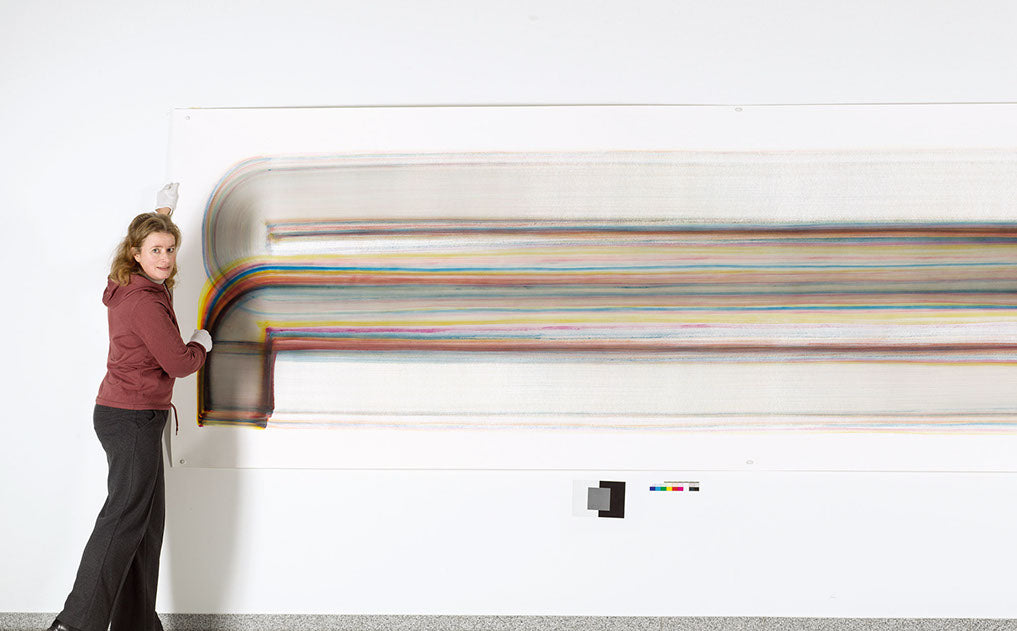
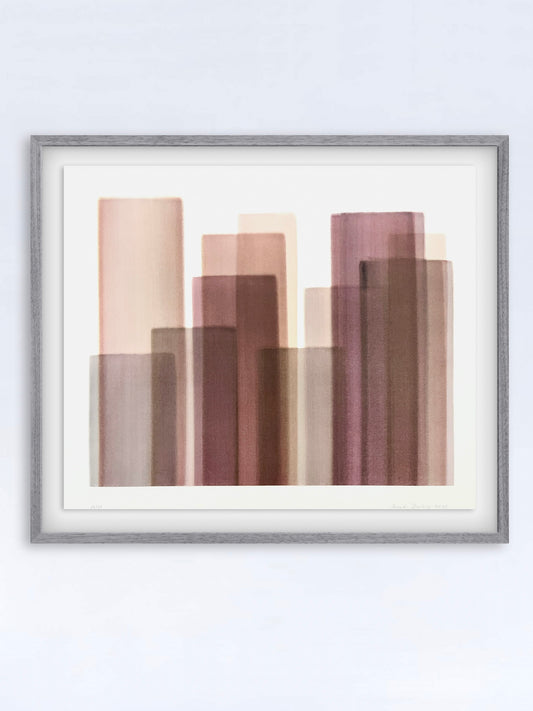
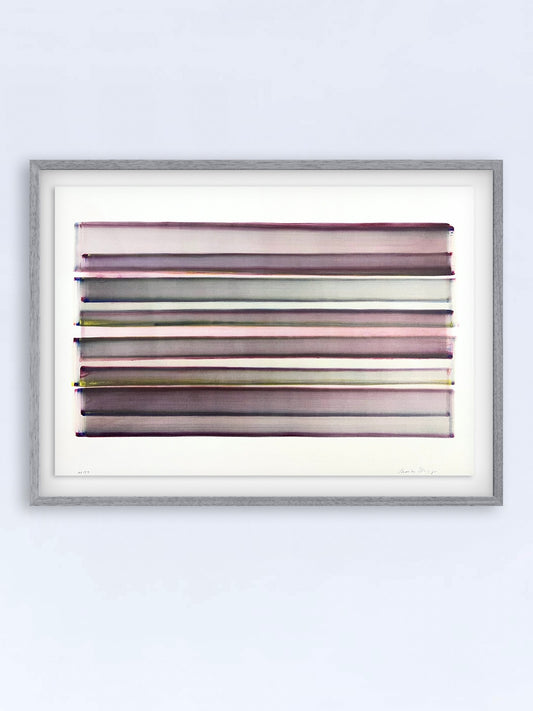
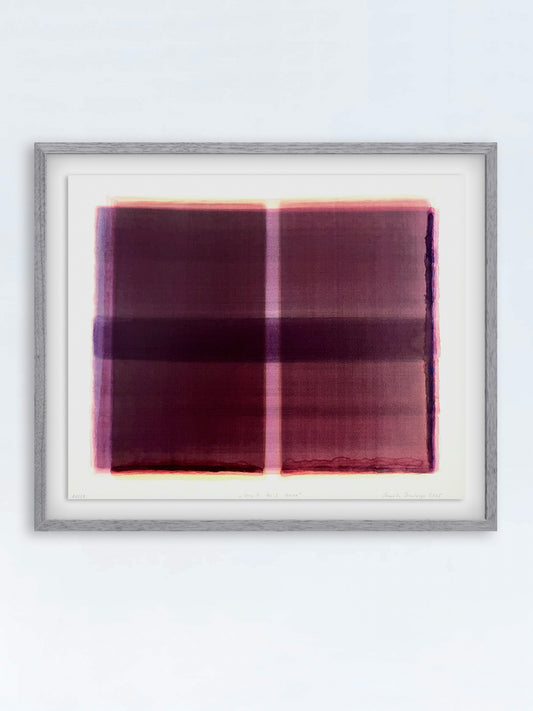
Marita Damkröger's large-format watercolours make a much more coherent impression at first glance. Here, different formal approaches are not brought together, but rather a hundred transparent, large-scale layers of colour are superimposed on each other. Unlike the usual watercolour technique, the colour does not flow into each other, but rather remains sealed in the individual layers. Their strong colours are gradually muted by the number of individual layers on top of each other. This is reminiscent of the possibilities of digital image software, with which any number of layers can be superimposed on each other and their respective transparency can be precisely programmed.
-
Series 8. No. 1
Regular price From 4 200 SEKRegular priceUnit price per -
Series 7. No. 1
Regular price From 4 200 SEKRegular priceUnit price per -
Series 1. No. 3
Regular price From 3 500 SEKRegular priceUnit price per -
Serie 4. Nr 6
Regular price From 4 200 SEKRegular priceUnit price per


EMANUEL BERNSTONE
INTERNAL LANDSCAPE - ARTISTIC GESTATION ON SÖS
These images were originally created by scraping areas of color over a silk fabric that was then pressed against paper. What we see on the wall are enlargements of the silk fabric's gouache imprint on aluminum sheets. If you get close, you can make out small squares, especially at the joints and edges. There, the color has clumped into the fabric structure.
At a greater distance, one thinks one can distinguish a landscape. But the critical eye discovers that the images consist largely of transitions from light to dark. These surfaces, even if fragmented, trick the eye into seeing vastness and atmospheric depths. We have inherited our sense of sight from prehistoric hunters and gatherers who roamed the landscape generation after generation. For many hundreds of thousands of years, the eye has been trained to appreciate the terrain and measure distances for us. It is out of ancient habit that we scan a color transition to distinguish depressions and crests, locations and dangers.
-

Untitled - Monotype
-

Untitled - Monotype
-

Untitled - Monotype


MARCUS EEK
'Pictures say a lot even though they are silent. For me they are in a field between the eye and the mind. Like looking over the shoulder of someone who is dreaming. And just like in a dream where logic can be absent without it disturbing, I have worked with my latest pictures. The light, color and composition have not been subordinate to the subject but instead played a shared leading role. - Marcus Eek
-

Certain Curtain II - Digital screen printing
-

View I - Digital screen printing
-

View III - Digital screen printing


MARIA ZETTERSTRAND
'In my artistic work, I explore the relationship of objects to their surroundings. I seek the intangible, something I sense exists in everyday interaction. Material things meet human routines. Objects create identity and shape everyday life. With repeated care, I highlight short sequences from daily being and doing in a spatial context where I relate to architecture, nature and its actors.' - Maria Zetterstrand
-

Up - Glazed ceramics
-

Wintergreen - Glazed ceramic
-

Folding II - Black stoneware


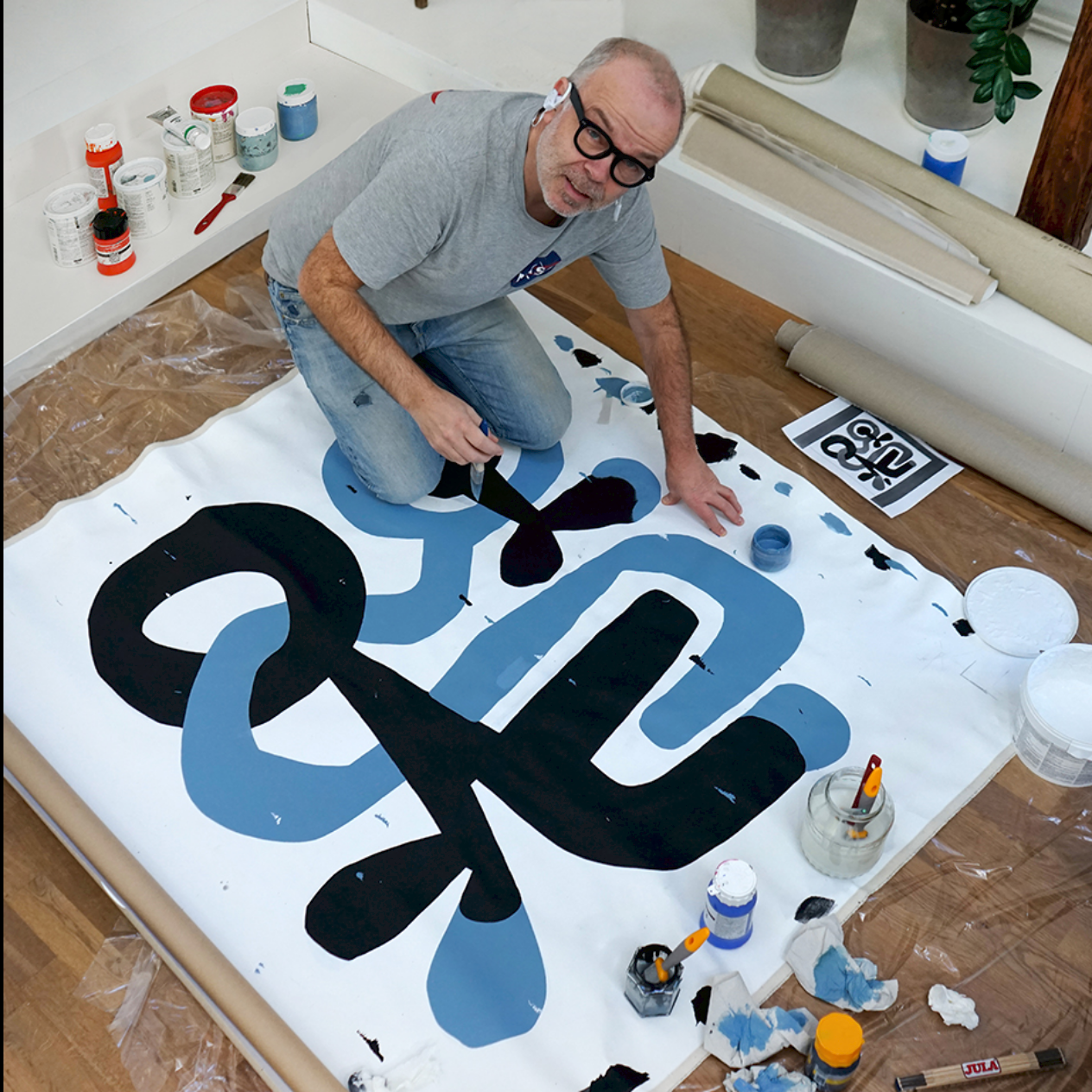
LASSE SKARBÖVIK
Lasse Skarbövik is from Norway, but now lives and works in Stockholm. An artist and designer with a wide experience of murals, textile patterns and decorations worldwide for companies and public spaces. He paints in bright colors and his characteristic shapes give a dynamic and uplifting impression.
Lasse Skarbövik has exhibited in Sweden, England, Spain, Norway, the USA and Japan and has participated in Liljevalch's spring salon on several occasions.
-

Flower Figure - Screen Printing
-

Blue Note - Oil on canvas
-

Firefly Noir - Screenprint


